
CHINA TRAVEL · trisAino
Paradox Museum Shanghai: an outing for second looks
Ceiling-walk illusions, interactive exhibits and a design based on the five elements shaped the museum described at its unveiling. Here is what to consider before planning a visit.
An outing built around perception
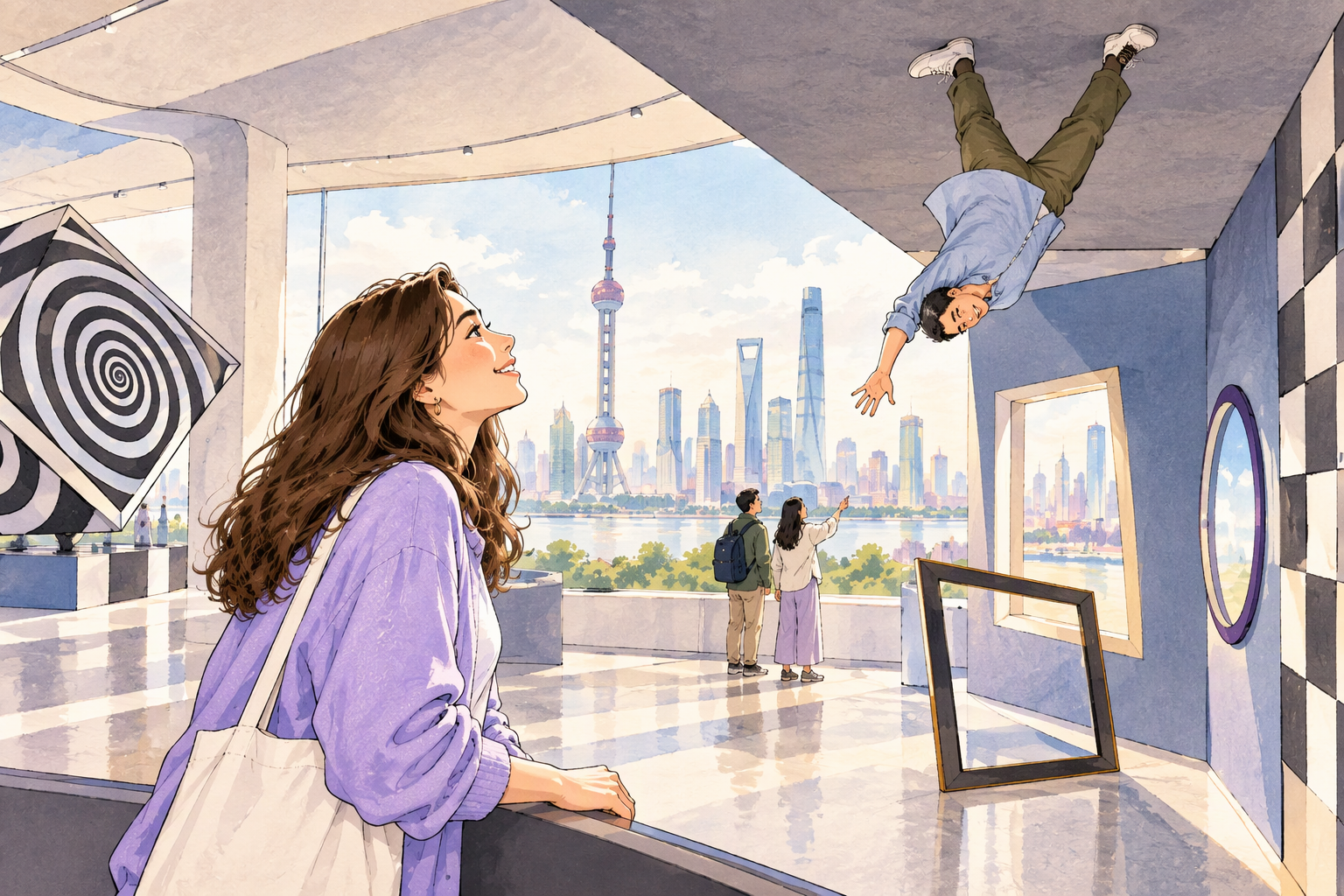
Would you rather study an object or puzzle over what your eyes seem to show you? Paradox Museum Shanghai was described at its unveiling through effects such as apparently motionless flowing water, ceiling walks, a sensation of weightlessness and bodies seeming to disappear in half. Those examples point to an outing centered on perceptual tricks rather than a conventional display of objects.
The museum’s stated aim was to challenge conventional perceptions and encourage visitors, particularly children, to question and think critically. That aim gives you a useful way to judge its appeal: the effects are not only things to look at, but prompts to ask why an image or sensation seems convincing. If that question interests you, the described experience may suit your choice of outing.

The scale reported at its unveiling
At its end-of-March unveiling, the venue was described as covering 1,300 square meters and featuring more than 60 illusions, holograms, installations and exhibits. The figures indicate the breadth of the presentation reported then; they are not a current inventory to use when choosing a particular exhibit.
What makes the Shanghai setting distinctive
The Shanghai center’s design incorporated traditional Chinese philosophy: its thematic zones represented metal, wood, water, fire and earth. That gives you another aspect of the design to consider alongside the illusions. Rather than treating every effect as an isolated trick, you can take an interest in how the zones were conceived for this venue.
The unveiling-era description also named interactive exhibits including the Water and Laser Paradox and the Butterfly and RGB Mural Room. It singled out Zero Gravity Space for a simulated sensation of weightlessness. Together, those examples show why the experience was presented as something to engage with, not simply view from a distance; confirm any named exhibit that matters to your visit.
A Dragon Year Commemorative Room was another feature of that description. Its Year of the Dragon theme makes it especially unsuitable to assume it remains part of the museum. If that room catches your attention, treat it as a detail of the earlier presentation rather than a reason to plan a visit around it.

Before you make the trip
The reported location was Shanghai Huashi Plaza on Huaihai Road. Confirm the current location and visiting arrangements before setting out, particularly if a specific exhibit is the reason you want to go.